If you’re asking where do I register my dog in Avery County, North Carolina for my service dog or emotional support dog, the key is knowing that service dogs and emotional support animals (ESAs) are not “registered” with the county in the way people often assume. In most cases, what residents actually need is a dog license in Avery County, North Carolina (if a local license program is in place) and, regardless of licensing, proof of a current rabies vaccination.
This page explains where to register a dog in Avery County, North Carolina by pointing you to official local offices that typically handle rabies enforcement, animal-related complaints, and public health guidance—plus a clear breakdown of what’s legally required for a service dog versus an emotional support dog.
- There is no federally recognized “service dog registry.” A service dog’s legal status comes from the dog’s training to perform tasks for a person with a disability—not a certificate or online registration.
- Emotional support animals (ESAs) are not service dogs under the ADA and do not gain public-access rights from “registration.”
- Local requirements usually focus on rabies vaccination and local licensing (if adopted). That’s why “animal control dog license Avery County, North Carolina” searches often lead you back to county/city offices rather than registries.
Where to Register or License Your Dog in Avery County, North Carolina
Dog licensing and rabies enforcement are commonly handled at the local level. Avery County residents typically start with public health (for rabies program guidance) and local law enforcement/communications for animal-related calls when there is no separate county animal services department. The offices below are official or public agencies serving Avery County.
Rabies Program & Public Health (Vaccination Rules, Bite Reporting Guidance)
Avery County Health Department (Toe River Health District)
| Address | 545 Schultz Circle, Newland, NC 28657 |
|---|---|
| Phone | (828) 733-6031 |
| averyhd@toeriverhealth.org | |
| Hours | Mon–Fri, 8:00 a.m. – 4:30 p.m. |
Animal-Related Complaints, Enforcement Assistance (When No Dedicated Animal Control)
Avery County Sheriff’s Office
| Address | 300 Schultz Circle, Newland, NC 28657 |
|---|---|
| Phone (non-emergency) | (828) 733-2071 |
| mike.henley@averycountync.gov | |
| Hours | Not listed |
Dispatch / After-Hours Routing (Non-Emergency Contact)
Avery County Communications Center (911 PSAP)
| Address | Not listed |
|---|---|
| Phone (administrative) | (828) 737-0173 |
| Not listed | |
| Hours | Not listed |
General County Office Directory (If You’re Asked “Where Do I Pay/Apply?”)
Avery County Offices (General Line)
| Address | 175 Linville Street, Newland, NC 28657 |
|---|---|
| Phone | (828) 733-8201 |
| Not listed | |
| Hours | Mon–Fri, 8:00 a.m. – 4:30 p.m. |
Stray / Shelter Support (Not a Licensing Agency)
Avery Humane Society (Privately Run Shelter)
| Address | 279 New Vale Road, Newland, NC 28657 |
|---|---|
| Phone | (828) 733-2333 |
| info@averyhumane.org | |
| Hours | Tue–Sat, 10:00 a.m. – 4:00 p.m.; Sun, 12:00 p.m. – 4:00 p.m.; Closed Mondays |
Overview of Dog Licensing in Avery County, North Carolina
What “registering your dog” usually means
In everyday language, “registering” often refers to one of these:
- Local dog licensing (a county or town-run program that issues a tag/record tied to your dog and your address).
- Rabies vaccination documentation (the rabies certificate and tag number issued when your dog is vaccinated).
- Microchip registration (done with the microchip company database, not the county).
Why local rules matter
North Carolina sets statewide rabies requirements, but dog licensing is often handled locally (county or municipal). That’s why searching for an animal control dog license Avery County, North Carolina can be confusing—because the “right” place to start may be public health for rabies questions, and county/town government for licensing and enforcement.
Rabies vaccination is the baseline requirement statewide
Under North Carolina law, owned dogs (as well as cats and ferrets) must be vaccinated against rabies beginning at four months of age and kept current. Dogs must wear rabies tags. Your veterinarian (or an authorized vaccinator) issues documentation that is often used as the foundation for any local licensing requirement.
How Dog Licensing Works Locally in Avery County, North Carolina
Step 1: Get a current rabies vaccination (and keep proof)
For most residents, the first “registration-like” step is simply getting your dog vaccinated and keeping the paperwork. Ask your veterinarian for:
- Rabies certificate (with vaccination date and expiration information)
- Rabies tag (your dog should wear it on their collar)
Step 2: Confirm whether your location requires a local dog license
Licensing requirements can depend on whether you live in an incorporated town (with its own ordinances) or in unincorporated Avery County. If you are unsure whether there is a specific dog license in Avery County, North Carolina requirement where you live, start with:
- Avery County Offices (ask which department handles dog licensing, if any)
- Avery County Health Department (for rabies program and enforcement guidance)
- Avery County Sheriff’s Office (for animal enforcement questions and complaints)
Step 3: If a license/tag is required, apply locally (not through a registry)
If your area requires a license, you’ll typically provide rabies proof and pay a fee. The county or municipality may issue a license tag separate from the rabies tag. This is the practical answer to where to register a dog in Avery County, North Carolina—it’s done through local government channels when a licensing program exists.
What if you’re specifically registering a service dog or emotional support dog?
In most cases, you do not register a service dog or ESA with the county. Instead:
- You keep your dog’s rabies vaccination current.
- If local dog licensing applies, you license the dog like any other owned dog.
- Your service dog’s legality comes from training and disability-related tasks, not an ID card.
- Your ESA status comes from housing-related documentation, not a public-access credential.
Service Dog Laws in Avery County, North Carolina
What legally makes a dog a service dog
A service dog is a dog that is individually trained to do work or perform tasks for a person with a disability. The tasks must be directly related to the person’s disability (for example, guiding, alerting, retrieving items, interrupting harmful behaviors, or assisting with mobility).
Public access vs. “registration”
Public access rights do not come from a certificate, vest, or website listing. In practice, a business may only be allowed to ask limited questions about a service dog (such as whether it is required because of a disability and what tasks it is trained to perform). They generally cannot demand paperwork as a condition of entry.
Local licensing still applies to owned dogs
Even if your dog is a service dog, local dog licensing and rabies requirements may still apply. A service dog is not exempt from basic public health measures like rabies vaccination. If you need help determining the correct local office, the “Where to Register or License Your Dog” section above lists official Avery County resources.
Behavior expectations
Service dogs must be under control (typically leashed, tethered, or harnessed unless those interfere with the dog’s work) and housebroken. If a dog is out of control and the handler does not take effective action, or the dog is not housebroken, a business may require removal—even if the dog is a service dog.
Emotional Support Animal Rules in Avery County, North Carolina
What an emotional support animal is (and is not)
An emotional support animal (ESA) provides comfort by being with a person, but it is not trained to perform disability-related tasks in the way a service dog is. Because of that, ESAs do not automatically receive the same public-access rights as service dogs.
Housing is where ESAs are most commonly relevant
ESAs are most often addressed in the context of housing accommodations. If you are requesting an accommodation, you typically need documentation from a qualified professional supporting the need for the ESA. This is separate from any local dog license requirement.
ESAs still need rabies vaccination and (if applicable) local licensing
Regardless of ESA status, your dog is still an owned animal subject to public health requirements like rabies vaccination. If a local dog license in Avery County, North Carolina applies where you live, your ESA would generally be licensed like any other dog.
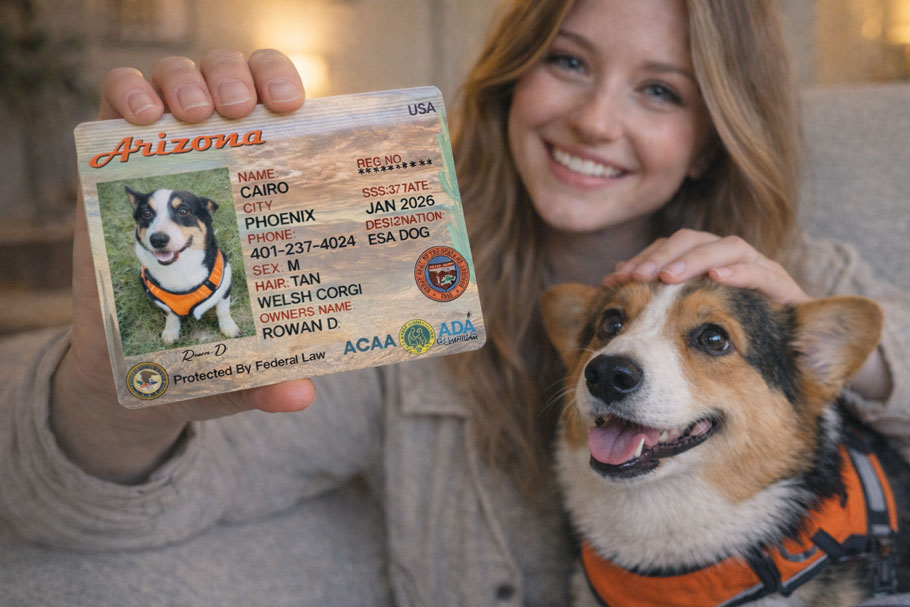
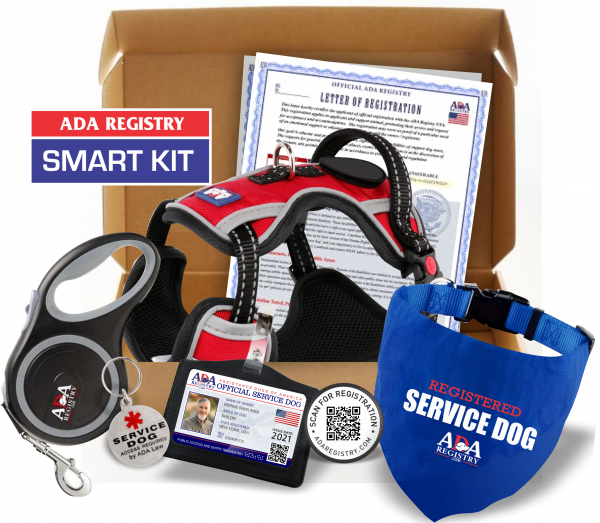
Avoid “ESA registration” websites
Many websites sell certificates, IDs, or registrations. These are often unnecessary for legitimate accommodation processes and can create confusion. If you’re unsure what documentation is appropriate for a housing request, consider speaking with your healthcare provider and verifying local animal compliance requirements through Avery County public health or county offices.
Frequently Asked Questions
Typically, no. Service dogs are not made “official” by a registry. What you may need is (1) current rabies vaccination proof and (2) a local dog license if your town/county requires it. If you’re unsure where to start, contact the Avery County Health Department (rabies guidance) or Avery County Offices (to route you to the correct licensing department, if one exists).
Requirements vary by locality, but many programs ask for:
- Proof of current rabies vaccination (certificate)
- ID
- Proof of residency
- Payment of a licensing fee
Not always. A rabies tag indicates your dog has been vaccinated and is part of rabies control compliance. A local dog license (if required) is a separate local registration/tag that may be issued by a county or municipality.
If there is an immediate danger, call 911. For non-emergency enforcement assistance or animal-related incidents, contact the Avery County Sheriff’s Office. For questions involving rabies exposure or bite-reporting procedures, contact the Avery County Health Department.
Generally, no. ESAs are primarily relevant for certain housing accommodation contexts, while service dogs have disability-related task training that can grant public access rights under applicable laws. ESA “registration” documents from websites do not automatically create public-access rights.